

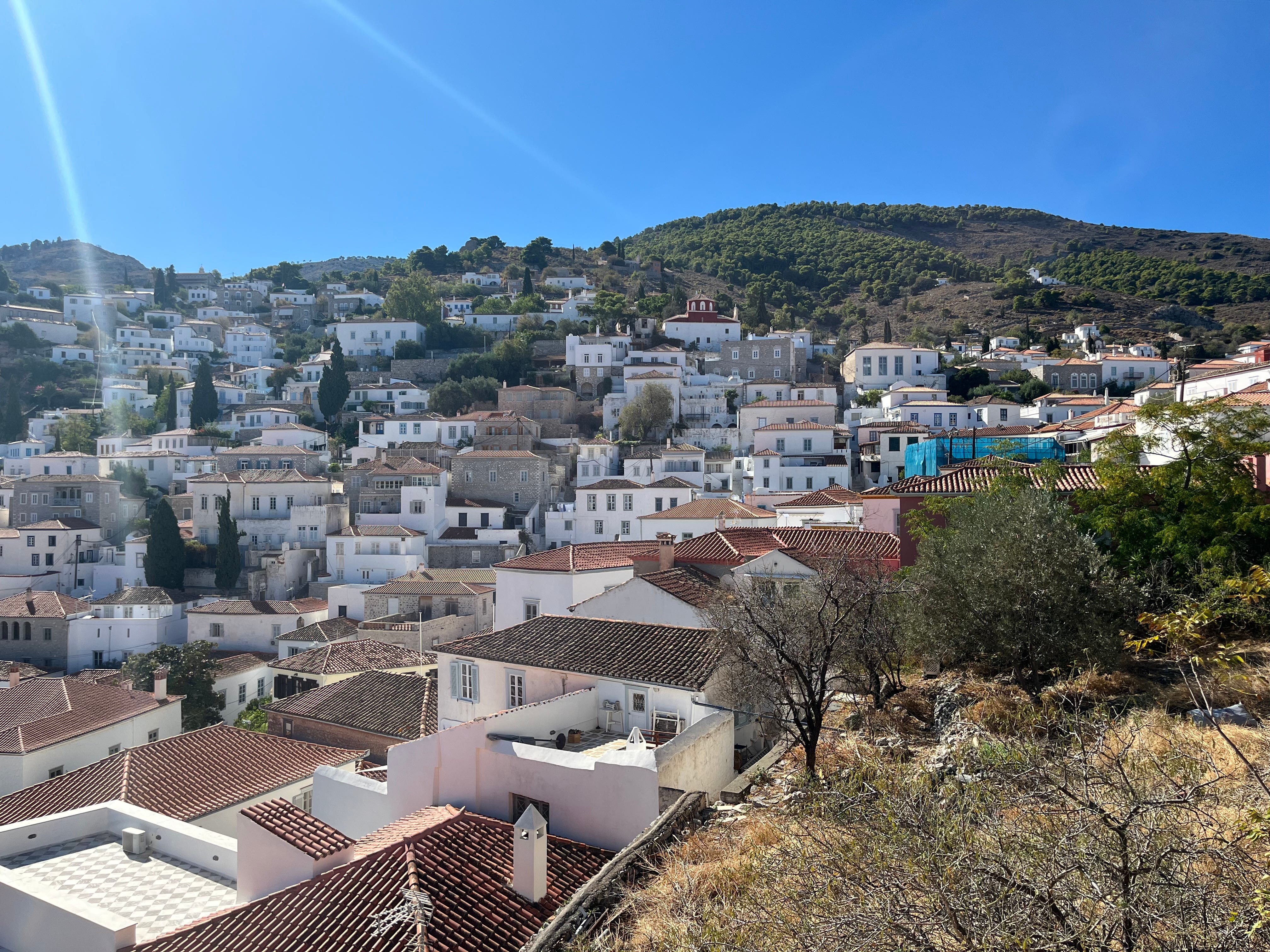
“Danger – Keep away”, reads a sign on the wall of a white-painted house on the Greek island of Hydra. An elaborate scaffolding arrangement props up the building’s jutting first floor. I walk beneath its crumbling plaster into a narrow passageway. On the right-hand wall is an arched entrance behind a gate that’s padlocked shut. Through the metal grille, I see several large ships’ anchors leaning against the walls – alongside plastic water bottles, a battered cardboard box and piles of rubble. A sign warns that CCTV is in operation. But beneath the peeling paint, the property’s grand character is still discernible. “It was a beautiful house,” says Takis.
Takis has shown me the way here from Hydra’s port, ten minutes up a steep cobbled path passing donkeys on the way down. I’d wanted to see the house because for many years it had a notable owner: Alexis Mardas, who in the later 1960s was known for his association with the Beatles. Mardas – dubbed ‘Magic Alex’ by John Lennon for his supposed technological wizardry – seemed to come from nowhere to join the Beatles’ inner circle as they reached their psychedelic pomp: he was with them on the Magical Mystery Tour bus, in India, at the live satellite broadcast of ‘All You Need Is Love’. He also became an official employee, overseeing the electronics division of their company, Apple – with ambitions of creating mind-blowing inventions and a new state-of-the-art studio. For all this, his role in their story doesn’t yet feel fully understood.
Magic Alex is also at the heart of the various mysteries surrounding the group’s attempt to buy a Greek island in 1967. Those still-unanswered questions include the names for places that don’t exist on maps, and Mardas’ alleged connections to Greece’s military dictatorship that led to the Beatles unwittingly being “used… as propaganda” for the regime. The financial aspects of the island plans – including Mardas’ claim that the proposed investment could help save the group tax – also remain unclear. Without Magic Alex’s efforts, these intriguing puzzles would probably not exist. But who was he, and why was he so apparently influential? I hoped coming to Hydra might provide some answers.
After parting ways with the Beatles around the time of their breakup, Mardas lived a wide-ranging life. But before his death in 2017, aged 75, he spent much of his time on this island – particularly in the 1980s and 1990s. Its arty, discreet glamour seems like a good fit for him. In the 1960s, it was home to a bohemian expat community that included a pre-fame Leonard Cohen. Though visitors are now considerably better-shod, the island – where cars are still banned – retains a cosmopolitan elegance. In the harbour, small boats rock gently alongside gleaming superyachts. The port town rises around it on three sides, creating a natural arena covered with white and terracotta houses. It’s a place to see and be seen – but to be careful who you tell. My attempts to learn more about Mardas seemed to encounter a similar spirit. Lots of people had heard of him. But those who could or would say anything definite were hard to find, and harder to pin down.


‘A mysterious pirate’s den’
The previous evening I’d spoken to Takis in Pirate Bar – an all-day venue he runs on a busy corner of the port, and a reliable hub of local gossip. Takis, who co-founded the bar in 1976, recalled that Mardas was friendly and well-liked but “strange”. He spent a lot of time with “famous people” and had come to his establishment twice with Joan Collins, star of the 1980s TV soap Dynasty. According to Takis, Mardas had been involved in various projects on Hydra, including a freight ferry business. But “you never know if he say the truth or not,” he warned. “He’s been good with me – with everybody. But a lot of talk.”
As well as his house near the port, Mardas also had another large property in a different part of the island, Takis said – which he’d renovated and later sold. But Takis had heard people question how Magic Alex found the money to fund such purchases, suggesting “rich people” could have been involved – “because sometimes the guy is broke”. At some point Mardas had also stopped coming to his town house. It was said that “the bank took it”, Takis said: he’d heard that two years ago people had come to “take all the stuff out”.
Whatever Magic Alex was doing, he did well from it for a long time. His town property was included in a 2015 photograph book featuring 40 of Hydra’s “most attractive houses”1. Images depict a “labyrinthine creation”, formed from several smaller properties into “very comfortable living spaces”, where “terraces, patios and living rooms follow one another on different levels”. The “small living room” (which actually looks fairly large) features an Iranian rug, contemporary art pieces and intricately embroidered cushions. A photo of the “library”, with a wood-beamed roof, includes a table of spirit bottles and a wall lined with “ancient editions of books”. I also recognise the archway with the grille I’d looked into. In the photo, the black anchors are displayed alongside old lamps, and large plants in clay jars – evoking “a mysterious pirate’s den”.
The book also refers to “a few unusual work rooms” – but it wasn’t until I spoke to one of Mardas’ former neighbours that I began to realise just how unconventional his house was. “It was a mysterious place,” said Stephan Colloredo-Mansfeld, who I met at a recording studio he runs on Hydra – very near Mardas’ old house, with stunning views over the port. Stephan told me he’d looked around the property in 2014, when it was already up for sale. He’d been interested in buying the impressive abode – which also featured a swimming pool and a “cinema room” with aeroplane seats, and was offered at €5m, he said. But the alterations Mardas had made created major administrative problems. “You can’t just build randomly like he did… You need permits for everything.”
The house’s decoration suggested powerful connections and a colourful personal life. When viewing it, Stephan saw photographs on display of people he identified as Juan Carlos I, the former king of Spain, and the Shah of Iran. Other elements were more surprising. The house “had Kalashnikovs and guns, a room with sex toys,” said Stephan, adding that Mardas “collected wheelchairs”. Stephan showed me a photograph he’d taken from the 2014 visit that appeared to show several assault rifles, and another of what he called a “vagina lamp” – shaped in an anatomically explicit representation of a woman’s body. Less surprisingly, another image showed a stack of electronic equipment with wires everywhere. Others showed cushions embroidered with slogans: “Good girls go to heaven. Bad girls go everywhere” and “Anyone who tells you money can’t buy happiness doesn’t know where to shop”.
‘He was a weird guy’
You wouldn’t find guns and pictures of kings in every home – but from what we know about Mardas’ life, they make some sense. According to media reports in the 1970s, his post-Beatles business activities included providing security equipment to various royal families around the world. In 2010, Mardas detailed several companies he founded, which he said sold products including “night vision products”, “armoured cars” and “bullet proof vests”. He claimed to have worked for clients including the UK and German ministries of defence, as well as the governments of more than ten other countries – including Iran, Spain, Egypt and Saudi Arabia. This work led to him developing “personal friendships with the kings of Greece, Jordan, Spain, Morocco, and with the President of Egypt and Prime Minister of Canada”.
Some of the objects Stephan said he saw in Mardas’ home back up reports of Alexis’ defence-adjacent work for powerful individuals and organisations. But who Mardas lived with on the proceeds of such activities – if anyone – is typically unclear. In 1968, Mardas married Euphrosyne Doxiadis, the daughter of a renowned architect, in London. The couple had two children, but they seem to have separated by the 1980s (I didn’t hear of any personal memories of Euphrosyne on Hydra). In 1993, he wedded the actress Tania Trypi on the island (they had one child, and divorced in 1997). I heard various mentions of other female companions, as well as house staff. But whatever the details, his main focus was not domesticity but extravagant socialising.
Stephan described him as “a big ladies’ man”, saying “he always had models here”, and held “crazy parties”. He’d attended some of these – but says that since he was a young boy at the time, he doesn’t have many memories. I was, however, able to speak on the phone to Stephan’s mother, Kristina, who despite no longer living on Hydra, does remember the events.
“He did have a lot of international friends who came to stay with him in the house, and he was always giving great parties,” Kristina, now 84, told me – “to which I was often invited.” These would typically involve “a wonderful dinner”, she recalled. “There was no drugs which you could see – there were probably some around – and just great conversations with different international people.” She also remembered Mardas once bringing Joan Collins to her house. “She came dressed up like a goddess with a long white dress, with her hair all done up. And then she came into my kitchen and said, ‘Oh, how quaint’.”
“He was a weird guy,” said Kristina of Mardas. “Nobody knew whether he was saying the truth or lying or whether what he was doing was what he was doing. He was a very mysterious character, and he liked to be mysterious.” She added that Mardas was “very hard to get to know well because he was very, very secretive, but always very generous and friendly and talkative. That’s the way he was. But I can’t tell you very much, because I don’t think anybody knows too much about him.”
Kristina added that there was “something always touching a little bit on the creepy, but not something you could discern and never sort of obvious in any way”. She remembered Mardas having “weird” girlfriends who were “very possessive about him”, speculating: “I think they were all in love with him because he was so mysterious”. She didn’t recall seeing sex toys in the house, but said: “I could imagine him having kind of a weird sex life – let’s put it that way”. In her view Mardas “wasn’t good looking or anything,” but “somehow he had quite an outstanding charm – he could really turn it on, so we could all fall for it”.
Being from an aristocratic family, Kristina Colloredo-Mansfeld is the kind of person that Mardas would have been interested in forging a connection with. Indeed, I heard of a rumour that at one point he had wanted to marry her. This may or may not explain some strange behaviour that Kristina recalls. After learning that she would be in Geneva, for instance, Mardas promised to meet her at a certain hotel in the city – but when she got to the agreed place “nobody had ever heard of him there”. Another time, he invited her horse riding, but it emerged that he had little knowledge of this activity after he put the saddle on “completely backwards”, said Kristina. “I think he was just making all this up – and anyway, and I never saw my saddle again … It just disappeared. And he kind of disappeared more and more from the island after that.”
A second house in a secluded bay
Magic Alex’s eccentricity is no secret. But each conversation on Hydra seemed to reveal new depths to his strangeness. Hearing that he had a second house on the island only added to the intrigue. I was told the property was at Molos, a small coastal settlement a few miles from the main town. This was where Kristina said the horse-riding incident took place, and where Takis said Mardas had carried out extensive renovation work.
One day I decided to go and see this house for myself – which, due to Hydra’s car ban, meant a trip by sea taxi. I had a vague idea of trying to speak to the place’s current owners – if I could identify it. As the bay of Molos came into view, I realised I needn’t have worried. The property is immediately unmissable – a vast white building extending for about 70 metres along the pebbly beach, looking out over calm turquoise water and lurid green pines. Vast grounds extend further to each side and way back into the island, with well-tended paths flanked by palm trees and pink bougainvillea.
It isn’t the kind of house where you just go and ring the doorbell. But as it happened, I’d got there as someone was returning. When I walked closer to the property, I saw three men in polo shirts standing outside. Soon afterwards, an imposing superyacht pulled in. Two dogs ran out onto the beach, wagging their tails. Several people disembarked, assisted by crew and staff, and settled under a gazebo while I explored the property’s perimeter.
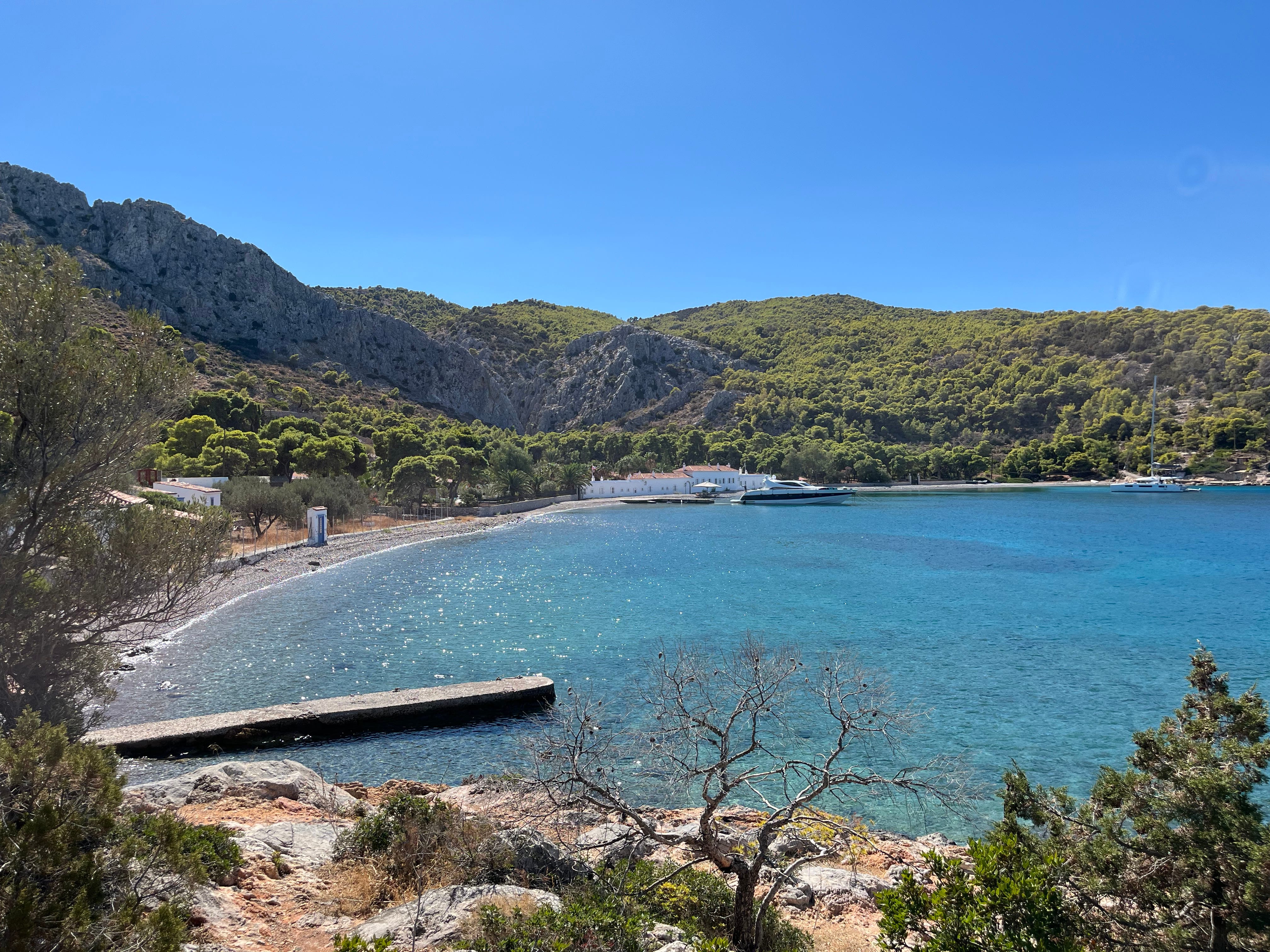
The grounds include a swimming pool, a tennis court, and various smaller buildings. (I later discovered from an online rental listing that the building accommodates 14 people, with seven bedrooms and seven bathrooms). Situated in a secluded bay, it seemed like the perfect getaway for a secretive man of mystery. As I walked along the beach in front of the house, I briefly stopped to try and speak to the people who’d got off the yacht. After learning that one was the building’s current owner, I explained that I was researching Alexis Mardas’ life on Hydra. Though we didn’t discuss the details, this person told me they had acquired the property before Mardas’ death.
The exact relationship Mardas had to the property, however, remains mysterious. Some seemed to doubt whether he was ever the sole owner, or even an owner at all. And there were suggestions that there had been a link to Mardas’ international connections – particularly those from Iran. One person I spoke to, who knew Mardas socially, was confident that the house had actually belonged to a well-connected Iranian friend, rather than Alexis himself. Another, though reluctant to talk, confirmed he had known Mardas – having sometimes taken him and friends, including Iranians, to the Molos house by sea taxi. Beyond that, this person would only say that Mardas was a “good man” who was generous with money – when he had it.
Iranian connections - and a deal gone wrong
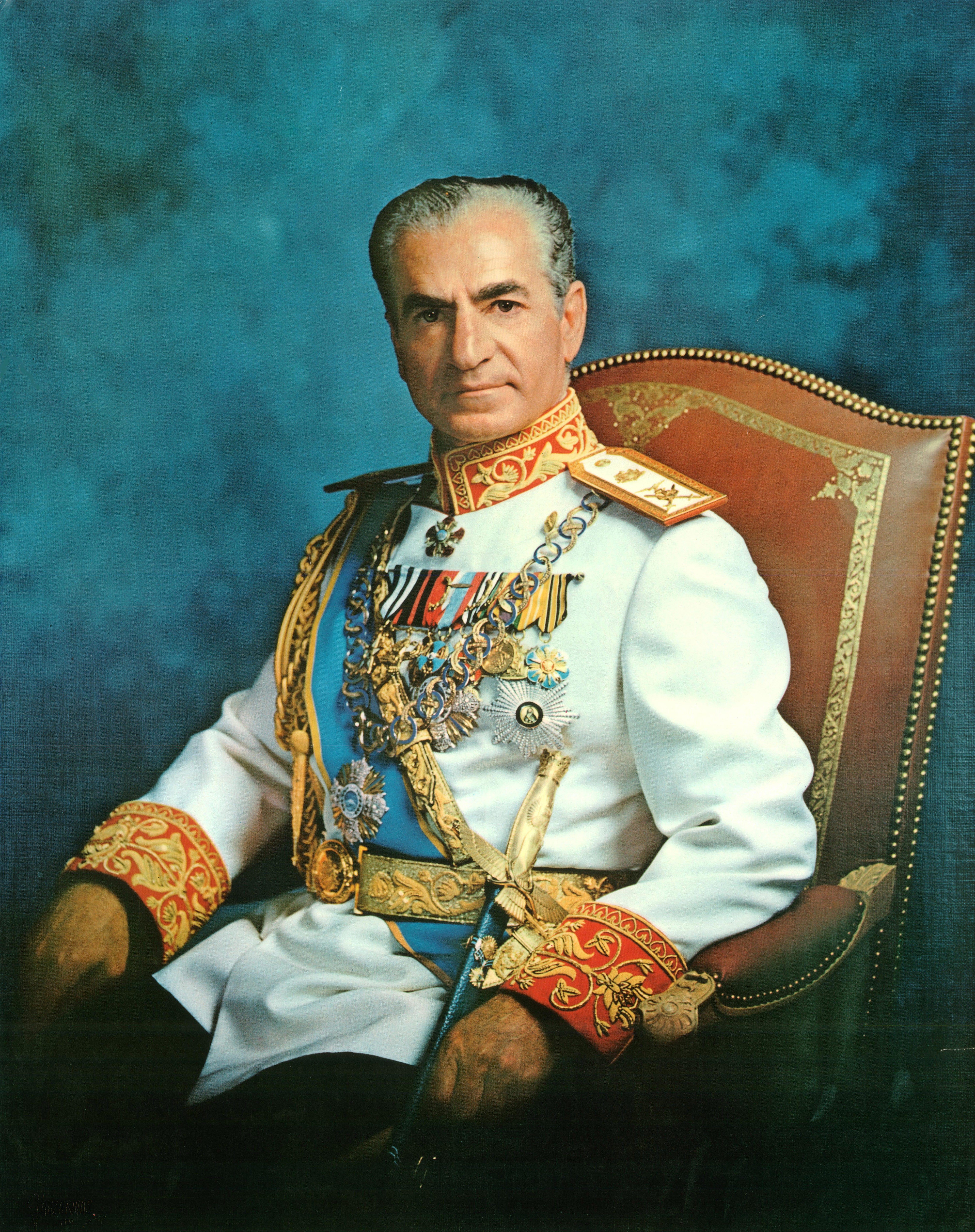
The recurrent mentions of Iranian links align with a 1979 New Statesman article which claimed that the Shah of Iran – who ruled the country until being overthrown that year – “supplied much of the finance behind [Mardas’] companies”. These businesses specialised in the growing market for “anti-terrorist protection” such as armoured cars, said the report, with customers including an array of international rulers and royals. The article describes one London showroom as being “stocked with guns, electronic bugs and surveillance equipment”, and that the Shah (who died in 1980) was “one of the first customers for Mardas’s bulletproof cars”. I was told that Mardas displayed a photograph of the Shah in his house, and that he had close links with others in Iranian royal circles. Kristina Colloredo-Mansfeld said he held a “big dinner party” for someone she described as “the cousin of the Shah”.
So Iran seems to have had a particular significance for Mardas. But it certainly wasn’t the only focus of his business activities. And it played no known part in the problems that emerged in the 2000s, when things began to go awry. Rather, it was an attempt to buy a major television production studio near Athens that led to Mardas losing his Hydra town house. In July 2009, Mardas claimed in an interview that the 4,500 sq m premises would be equipped with “the latest technology” within months, saying he had discussed productions with a well-known director and companies from Dubai and Abu Dhabi. But in the wake of the global financial crisis, difficulties arose. In 2015, an employee of Hydra’s mortgage registry told the media that Mardas had lost the house, “possibly due to his debts to the state”. (According to the same report, the property was acquired by a private bank in December 2014.)
Before the bank took ownership of it, Tracy Gionis, an estate agent on Hydra, had been tasked by Mardas with promoting the house’s sale. When she first entered the building, it appeared it had been abandoned for years. Her impression was that it was “literally pick up in the middle of the night and leave”, she told me. “Everything was in its place… all his personal stuff, clothes, even a horse saddle,” she said, recalling: “He had a row of Ray-Ban glasses on his table – about 20 of them.” She told me she didn’t see guns or sex toys. But the deterioration of the property’s condition was “very sad,” Tracy added. “Some mice had got in and… nobody had been in to clean”. “I went in there and had a look and tried to promote it. I had somebody interested, but then the bank claimed it.”
Due to the lack of regulatory compliance, achieving a sale was clearly not straightforward. But Tracy told me that, after more than a decade, the property had recently been bought – for a fraction of its original asking price. The purchase presumably explains why in 2025, the house was “emptied”, as Tracy recalled, with Mardas’ belongings brought outside for people to take. Among the discarded items, Stephan Colloredo-Mansfeld identified what appeared to be a nugget of Beatles related-history. He retrieved a red box of EMI tape, labelled “The Beatles/George Harrison” – with the latter name apparently in Harrison’s own handwriting. The recording is labelled January 1967, and the listing refers to tracks on Harrison’s 1968 solo album, Wonderwall Music. When Stephan restored the tape, however, he found that whatever was previously on it had been replaced by several takes of the 1969 song ‘New Day’ by Jackie Lomax – a singer-songwriter who recorded on the Beatles’ label, Apple.
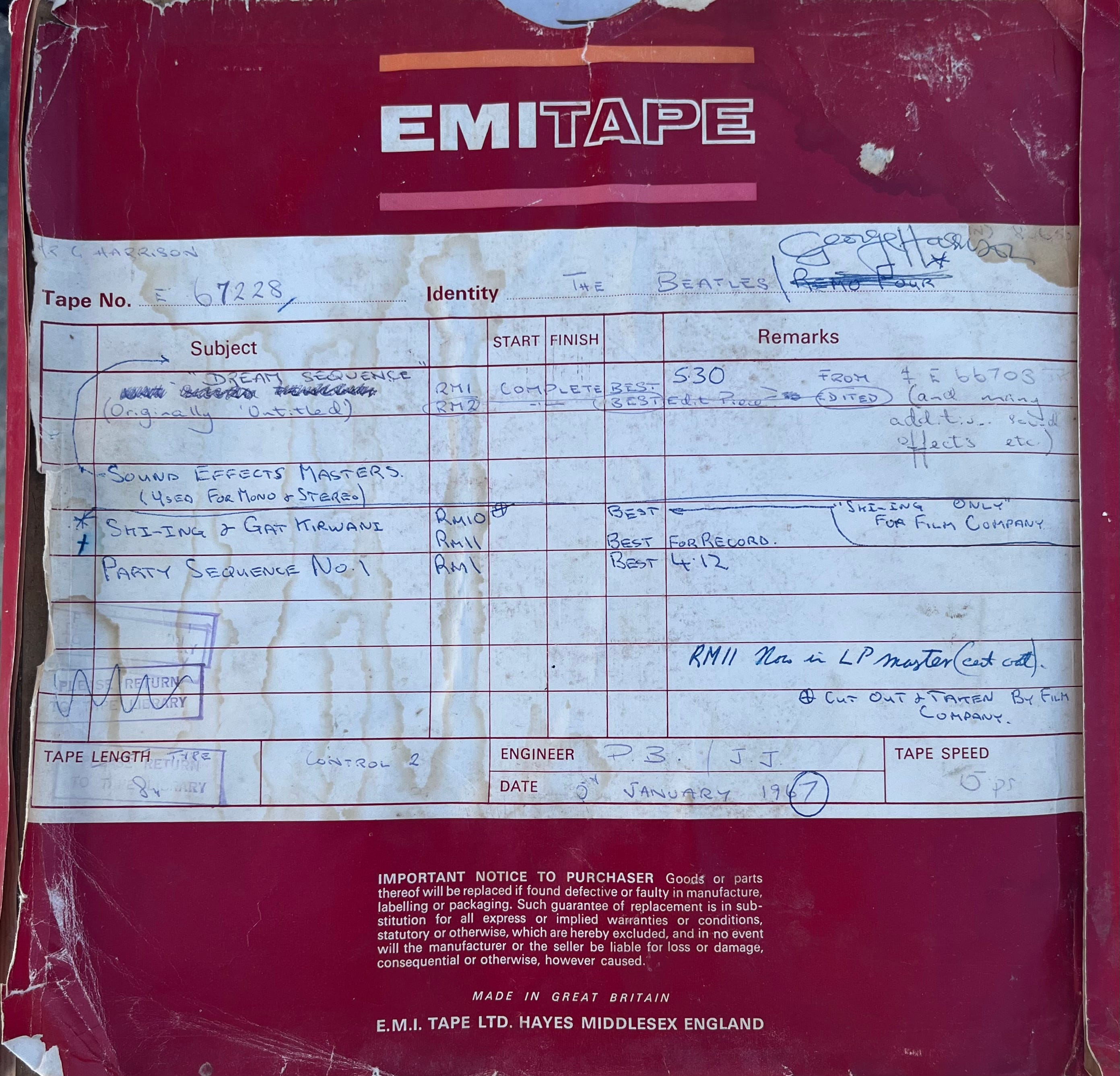
The object is a reminder that Mardas was not just a hanger-on: at one point, he had significant involvement in the Beatles’ lives and work. It was his rapport with John Lennon that initially gave him access to the group’s inner circle. Mardas’ ability to conjure up devices with randomly flashing lights, and other unusual gadgets, delighted the Beatle – particularly when he was tripping on LSD. John even described Alexis as his “new guru”. As head of Apple Electronics, Mardas was given responsibility to create a new studio for the group – but he left under a cloud after the facility was found to be unfit for purpose. And though the Beatles had been fond of Magic Alex, their producer George Martin did not share this view. While acknowledging that he was “certainly clever, a good electronic technician”, he described Mardas in his autobiography as “so preposterous that it would have been funny had he not caused so much embarrassment and difficulty with me in the recording studio”.
By the time of Mardas’ death, he had long since lost his former closeness to the Beatles – as he seems to have done with many other friends. It is said that he spent his last years in poor health: living with osteoarthritis, according to one obituary. And when he died in January 2017 at his apartment in Athens, no one realised for several days. By then, his time on Hydra was already passing into memory. Kristina Colloredo-Mansfeld recalled: “We heard that he had debts. He just became more and more mysterious, and everything became more and more weird.” The last time she saw Mardas, Kristina remarked to him that the town house was “looking very shabby”. After promising that he “must do something about that”, he invited her out for dinner and ordered lobster, which he left on the plate. “The next thing I knew, the whole place was up for sale.”
‘Half of his life was imaginary’
“He disappeared suddenly from Hydra,” according to Miranda Sofianou, whose owns a hotel on the island that has belonged to her family since the 1960s – and is an influential figure in Hydra’s cultural life. I met her at her house in Athens. She recalled Mardas as being “very capable – but half of his life was imaginary”. She attended several “very formal dinners” at his house, where she witnessed both his charm and his mythomania. As well as claiming to have been “the manager of the Beatles”, Miranda remembered Mardas boasting of his supposed medical expertise, saying of a prestigious Athens hospital that “when they have a serious problem, they call me”. Like others, she also recalled several strange aspects of Mardas’ home – including a “small hospital” with tools and oxygen, and another room containing “hundreds of keys”. But overall the property was “very beautifully done, with a great aesthetic” – and he “made a paradise” at Molos.
One reason Alexis held frequent parties was to “show off who he is, and how famous women were with him”, said Miranda. She believed Mardas “had the feeling of superiority… because he was very intelligent, very proud about himself and he wanted to live on a high level every day”. Aligning with what Stephan Colloredo-Mansfeld had seen, she recalled a table in the house with photographs signed by famous people, including King Juan Carlos of Spain, who Mardas spoke of “as [if] he was a very close friend”. “He knew how to enter, how to get into this society,” said Miranda. Alongside his legendary charm, one comment Mardas made to her suggests another important part of his strategy for doing this. He suggested that Miranda should try to become mayor of the island. “I said to him, ‘I wonder how’,” she remembered. “He said: ‘It’s a matter of spending money.’”
The remark seems to encapsulate Mardas’ approach to life. Rather than accept reality, he preferred to create his own, by whatever means he could. Whether he actually had the wealth and influence he claimed to hardly mattered. He pretended he did, until it came true. He bragged, flaunted and splurged, moving so fast that the line between reality and fiction became impossible to discern. Much of the time, it worked – until it didn’t. And when there was no need to charm, some saw a darker side to him. On one visit to his house, Miranda remembered, the way Alexis treated his then girlfriend “was not very nice [or] kind… not at all”. She later passed the woman on the street. “She was crying and she said, ‘I don’t think I will see you again,’” Miranda told me. “She should have left him before, I think, because this was not the behaviour of a gentleman to a lady.”
Trying to understand Mardas isn’t a simple matter. In fact, it often feels like peering through that padlocked gate into his decaying labyrinth. In my time on Hydra, I thought I’d got to know him at least a bit better. But just as I was about to depart, I learned some new information: as well as the two houses discussed here, Mardas also owned two more, smaller properties on the island. While not as significant as the large houses, the surprise underlined how little we still know about the man: the clouds of confusion he spun around himself continue to swirl. “You could not put him in a box,” said Miranda. “He was a box by himself. You could not understand if he was innocent, if he was very cunning, if he was a good man or he was evil. I cannot say. The only thing I could say [is] that I liked his company… every time I was with him, I had a great time.”
Read more:


Hydra, Private Views (2015) by Catherine Panchout. The photos in the book were taken between 1997 and 2012.
Having just returned from Hydra, I was fascinated by your piece and by the mystery surrounding Alexis Mardas. Keep up the great work!
Amazing research as usual. It's not surprising that he had a talent to attract the rich, powerful, and paranoid. And now I'm wondering if he's mentioned in the Epstein files.